
Your Garage Door Is Talking to You — Are You Listening?
If you live in Lambertville, you probably open and close your garage door at least twice a day. That's over 1,400 cycles a year. Over time, all that movement takes a toll on the hardware, and one of the first signs of trouble is noise.
A healthy garage door should operate relatively quietly. If yours has started grinding, squealing, rattling, or banging, it's not something you should ignore. Different sounds point to different problems, and catching them early can save you from an expensive repair — or a door that stops working entirely on the coldest morning of the year.
Let's break down the most common garage door noises, what causes them, and what you should do about each one.
Grinding or Scraping Sounds
A grinding noise usually means metal is rubbing against metal somewhere it shouldn't be. The most common culprits are:
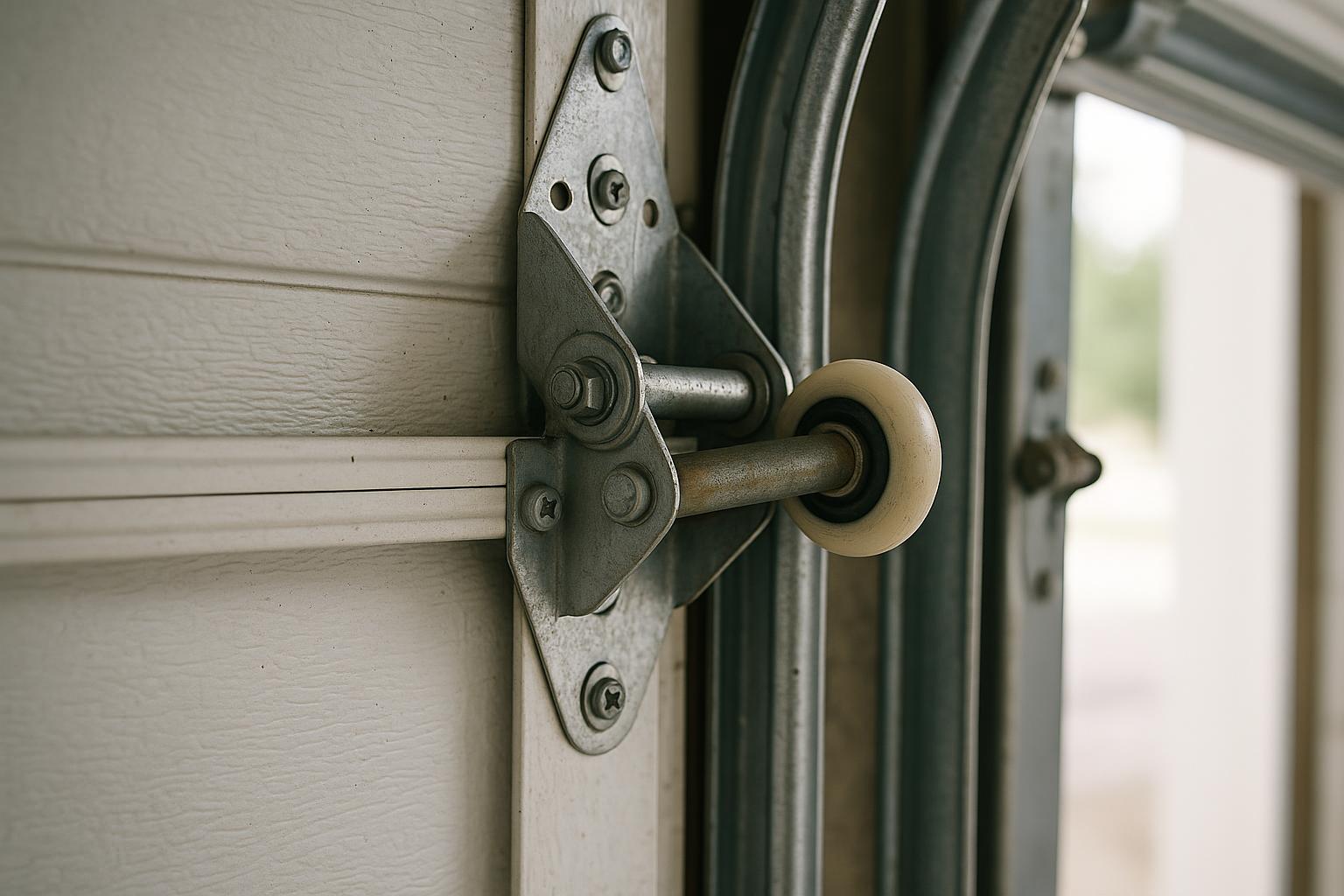
- Worn rollers. Steel rollers wear down over time and can start grinding against the track. Nylon rollers are quieter and last longer, and swapping them out is one of the easiest upgrades you can make.
- Misaligned tracks. If the vertical or horizontal tracks have shifted even slightly, the door can scrape against them as it moves. This creates a harsh grinding or scraping sound and, if left unchecked, can cause the door to bind or jump off the track entirely.
- Dry bearings. The bearings in your rollers, hinges, and spring system need lubrication. Without it, they grind and wear out much faster than they should.
If you hear grinding, start by visually inspecting the tracks for obvious bends or gaps. But if the tracks look fine and the noise persists, it's time to have a technician take a closer look before the problem gets worse.
Squealing or Squeaking
A high-pitched squeal when the door moves is almost always a lubrication issue. The moving parts of your garage door — rollers, hinges, springs, and the opener chain or screw drive — all need periodic lubrication to function smoothly.
Here's what you can do:
- Apply a garage door-specific lubricant (not WD-40, which is a solvent, not a lubricant) to the rollers, hinges, and spring coils.
- Lubricate the opener's chain or screw drive if applicable.
- Wipe away any excess to prevent dust and dirt buildup.
If the squealing stops, you've solved the problem. If it doesn't, the rollers or hinges may be too worn to benefit from lubrication and will need to be replaced. Many homeowners in Lambertville and the surrounding Temperance and Ottawa Lake areas deal with this issue more in winter, when cold temperatures cause lubricant to thicken and metal parts to contract.
Rattling or Vibrating
A rattling sound often points to loose hardware. Your garage door is a heavy, moving system held together by dozens of nuts, bolts, and brackets. Over hundreds of cycles, these fasteners can loosen.
Common sources of rattling include:
- Loose track bolts. The brackets that hold the track to the wall and ceiling can work loose over time.
- Loose chain on the opener. If your opener uses a chain drive, the chain can develop slack and slap against the rail as the door moves.
- Worn hinges. Hinges with worn-out pivot holes will wobble and rattle with every cycle.
You can tighten most visible bolts yourself with a socket wrench, but be careful — never touch the bolts on the bottom brackets where the lift cables attach. Those are under extreme tension from the springs and should only be handled by a trained professional.
Popping or Snapping Sounds
A loud pop or snap when the door starts moving is concerning and usually involves the torsion spring system. As springs age, they can develop weak spots that cause them to shift or settle with a popping sound. This noise can also come from:
- The opener struggling. If the opener motor is straining to lift the door, it may produce a popping or clicking sound. This often means the springs aren't carrying their share of the load, forcing the opener to work harder than it was designed to.
- Sticking rollers. A roller that momentarily sticks in the track and then releases can produce a sharp popping noise.
Popping sounds related to springs should always be evaluated by a professional. A spring under tension is dangerous, and a spring that's making noise is one that may be close to failure.
Banging When the Door Closes
If your garage door slams shut the last few inches instead of settling gently, the problem is usually with the springs or the opener's force settings. Properly balanced springs should support the door's weight throughout its full range of motion. When they weaken, the door becomes "heavy" at the bottom of its travel and drops the last stretch.
You can test your door's balance by disconnecting the opener (pull the red emergency release handle) and manually lifting the door halfway. Let go. A properly balanced door should stay roughly in place. If it drops, the springs need adjustment — a job that requires professional tools and training.
Humming but Not Moving
If your opener hums or buzzes but the door doesn't move, the motor is getting power but can't drive the door. This could mean:
- The opener has been disconnected from the door (check the emergency release).
- A stripped gear inside the opener unit.
- The door is locked or obstructed.
A stripped gear is one of the most common opener failures we see from homeowners in the Lambertville and Toledo area. It's repairable, but the longer you run the motor with a stripped gear, the more damage you risk to the motor itself.
When to Call a Professional
Some noises have simple fixes — a can of lubricant or a socket wrench can solve a lot of problems. But there are clear lines you shouldn't cross as a DIYer:
- Anything involving springs. Torsion and extension springs are under extreme tension and can cause serious injury.
- Track realignment. Improperly adjusted tracks can cause the door to fall.
- Opener motor or gear repair. These involve electrical components and should be handled by someone who works on them regularly.
At Lambertville Overhead Door Co, we handle these calls every week for homeowners across Lambertville, Temperance, Monroe, Sylvania, and the surrounding communities. We'll diagnose the noise, explain what's causing it, and give you honest options — whether that's a simple adjustment or a part replacement.
Don't Wait Until the Noise Becomes a Breakdown
A noisy garage door is almost always an early warning. The sounds are telling you that something is wearing out, loosening up, or drying out. Addressing it now is almost always cheaper and less disruptive than waiting for a full failure.
If your garage door has started making a sound that wasn't there before, give us a call. We'll come out, figure out what's going on, and get your door running quietly again. That's what we do — show up on time, fix it right, and stand behind the work.