
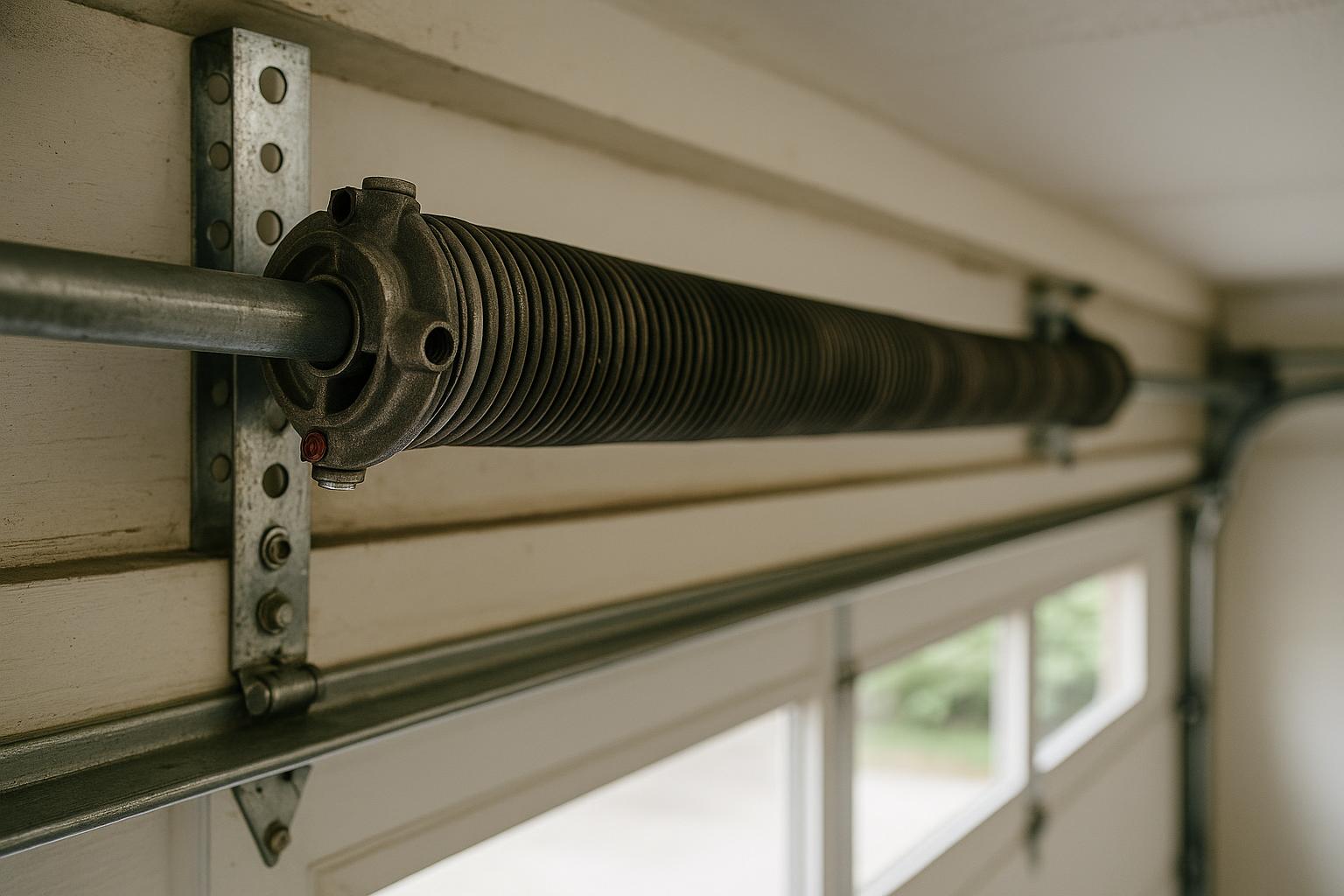
Your Garage Door Springs Are Trying to Tell You Something
If you've ever had a garage door spring break, you know the sound — a loud bang that echoes through the house like a gunshot. It's startling, and it leaves your garage door completely inoperable. The good news is that springs almost never fail without warning. There are clear signs that your garage door springs are nearing the end of their life, and catching them early can save you from an inconvenient — and potentially dangerous — situation.
Here in Lambertville, we see spring failures year-round, but they're especially common during temperature swings in late fall and early spring. Cold weather makes metal more brittle, and that extra stress can push aging springs past their limit. Knowing what to look for can help you get ahead of the problem.
How Garage Door Springs Work
Before we get into the warning signs, it helps to understand what your springs actually do. Your garage door is heavy — most residential doors weigh between 130 and 350 pounds. The springs carry the vast majority of that weight, making it possible for your opener (or your arms) to lift the door with minimal effort.
There are two main types of garage door springs:
- Torsion springs — mounted on a metal shaft above the door opening. These are the most common type on modern residential doors.
- Extension springs — mounted along the horizontal tracks on either side of the door. These are more common on older installations.
Both types are under extreme tension, which is why spring replacement should always be handled by a trained professional. A spring under tension can cause serious injury if it's mishandled.
7 Warning Signs Your Springs Are Wearing Out
1. The Door Feels Heavier Than Usual
Try this simple test: disconnect your garage door opener by pulling the emergency release handle, then manually lift the door about halfway. A properly balanced door should stay in place on its own. If it feels unusually heavy or slides back down, your springs are losing tension and can no longer counterbalance the door's weight.
2. The Door Opens Unevenly or Crooked
If one side of your garage door rises faster than the other, it often means one spring is weaker than its counterpart. On doors with two torsion springs, uneven wear can cause the door to tilt as it opens. This puts extra stress on your tracks, rollers, and opener — leading to additional problems down the road.
3. Visible Gaps in the Spring Coils
Take a look at your torsion springs when the door is closed. A healthy spring has tightly wound coils with uniform spacing. If you notice gaps or stretched-out sections in the coils, the spring is fatiguing and could break soon. This is one of the easiest visual checks you can do from inside your garage.
4. The Opener Struggles or Strains
Your garage door opener is designed to do a relatively small amount of the lifting work. When springs weaken, the opener has to compensate for the extra weight. You might notice the motor sounds louder, the door opens more slowly, or the opener stops partway through the cycle. Ignoring this can burn out your opener motor entirely.
5. Loud Squeaking or Creaking Sounds
Some noise during operation is normal, but loud squeaking, grinding, or popping sounds coming from the spring area are not. These noises often indicate that the spring is corroding, losing lubrication, or developing micro-fractures in the metal. A little maintenance can extend spring life, but excessive noise usually means replacement is coming.
6. Rust on the Springs
Rust is a spring's worst enemy. It increases friction between the coils, which accelerates wear and weakens the metal. If you see visible rust forming on your springs, it's worth having them inspected. In some cases, lubrication and treatment can slow the process, but heavily rusted springs should be replaced before they fail.
7. Your Springs Are More Than 7-10 Years Old
Most standard garage door springs are rated for approximately 10,000 cycles — one cycle being a single open-and-close sequence. For the average household that uses the garage door two to four times a day, that works out to roughly 7 to 10 years of life. If your springs are in that age range and you're noticing any of the signs above, it's time to have them checked.
What Happens When a Spring Breaks
When a garage door spring snaps, the door becomes dead weight. In most cases, the opener won't be able to lift it, and you'll be stuck — either with your car trapped inside or with an unsecured opening to your home. If a spring breaks while the door is in motion, the door can slam shut unexpectedly, which poses a real safety risk to anyone nearby.
We've responded to plenty of emergency calls from homeowners across Lambertville and Temperance who woke up to a broken spring on a Monday morning with no way to get their car out of the garage. A little awareness goes a long way toward avoiding that scenario.
Can You Replace Garage Door Springs Yourself?
We strongly advise against DIY spring replacement. Torsion springs are wound under extreme pressure, and improper handling can result in serious injury or even death. Extension springs, while somewhat simpler, are still dangerous if the safety cables aren't properly installed. This is one repair that should always be left to experienced technicians with the right tools and training.
How to Extend the Life of Your Springs
While springs won't last forever, you can maximize their lifespan with a few simple practices:
- Lubricate your springs — Apply a silicone-based or white lithium grease spray to your springs two to three times a year. This reduces friction and helps prevent rust.
- Schedule annual maintenance — A professional tune-up includes spring inspection, balance testing, and tension adjustment. It's the single best thing you can do to prevent unexpected failures.
- Keep an eye on balance — Perform the manual balance test described above every few months. If the door doesn't hold its position, call a professional.
- Address problems early — If you notice any of the warning signs listed in this post, don't wait for the spring to snap. Early replacement is safer, less stressful, and often less expensive than an emergency repair.
Need a Spring Inspection in Lambertville?
At Lambertville Overhead Door Co, we handle spring replacements and inspections every week for homeowners throughout Lambertville, Ottawa Lake, Monroe, Sylvania, and the surrounding communities. We use high-cycle springs that outlast standard hardware, and we always replace springs in pairs to ensure even performance and prevent a second failure shortly after the first.
If your garage door is showing any of the warning signs above — or if your springs are getting up there in age — give us a call. We'll inspect your system, give you an honest assessment, and make sure your door is safe and reliable before there's a problem.