
Rule of thumb: disconnect the opener, lift the door to waist height, and it should stay put on its own. If it drifts up, drops down, or feels noticeably heavier on one side, the door is out of balance. The exceptions: doors with very stiff new springs can hold for a few extra seconds even when they're slightly off, and some openers have soft-start settings that mask strain during normal use, so the manual lift test is the only way to know for sure.
Balance isn't a cosmetic issue. A properly balanced door should move with almost no effort from a person or a motor. When it's out of balance, the springs aren't carrying their fair share of the door's weight, which means the opener's motor and gears pick up the slack on every single cycle.
Why This Matters More Here
Steel torsion and extension springs change tension slightly with temperature. Through a hard winter with deep cold, springs tighten up and can feel different than they do in July's humidity. A door that was borderline balanced in September can feel noticeably worse once temperatures drop, and road salt and ice buildup on tracks add extra drag right when the springs are already working harder. Running the test now, before the cold sets in, gives you a baseline and time to fix a problem before it turns into a no-open morning in January.
Tools You'll Need
- Work gloves
- A sturdy step stool or ladder (for taller doors)
- A pencil or piece of tape to mark door position
- A flashlight
- Your opener's manual, to find the release cord or lever
- A second person, helpful but not required
Step-by-Step: How to Test the Balance
- Close the door fully. Start from a closed position so you have a clean baseline.
- Find the manual release. This is the red cord or lever hanging from the trolley on the opener's rail. Pull it to disconnect the door from the opener. You'll feel or hear it release into manual mode.
- Lift the door by hand. Raise it slowly to about waist height, roughly the halfway point of the door's travel.
- Let go and watch. A balanced door stays exactly where you left it. If it slides down toward the floor or creeps upward on its own, the springs aren't matched to the door's weight.
- Mark and repeat at other heights. Lift to shoulder height and then almost fully open, letting go each time. A door with a hidden problem sometimes holds at one height and fails at another, especially if one spring is weaker than the other.
- Watch for uneven movement. As you lift, note whether one side rises faster than the other or the door visibly tilts. That points to one spring doing more work than its partner, or a cable issue on one side.
- Listen and feel for resistance. Grinding, binding, or a spot where the door suddenly gets heavier usually means a track or roller problem layered on top of the spring issue.
- Reconnect the opener. Once you're done testing, pull the release cord again (or use the lever) to re-engage the trolley, then run the door through a full open-close cycle with the opener to confirm it reconnected properly.
What an Unbalanced Door Is Doing to Your Opener
The opener is designed to nudge a balanced door the rest of the way, not to lift dead weight. When balance is off:
- The motor works harder on every cycle, which shortens its lifespan and can lead to overheating.
- Gears and the drive belt or chain wear unevenly, since they're compensating for weight the springs should be handling.
- The opener may start struggling to fully close or open the door, triggering error codes or random reversals.
- Force settings that were fine a year ago can suddenly seem too strong or too weak, because the opener is fighting a different load than it was set up for.
- In some cases, the capacitor or circuit board takes the hit from repeated overexertion, which is a more expensive repair than the spring issue that caused it.
In short, an unbalanced door turns a simple spring problem into a slow, expensive opener problem if it's left alone through a full winter of hard use.
What You Can Handle Yourself vs. What Needs a Technician
You can safely check for and fix a few contributing issues:
- Inspect rollers, hinges, and tracks for visible dirt, rust, or debris, and clean/lubricate the moving metal parts (not the springs themselves) with a garage-door-rated lubricant.
- Tighten visibly loose bolts on the track brackets.
- Check that the tracks are free of obstructions and that nothing has shifted after spring thaw settling, which can happen as the ground around a slab moves.
- Confirm cables aren't frayed or kinked, without touching or removing them.
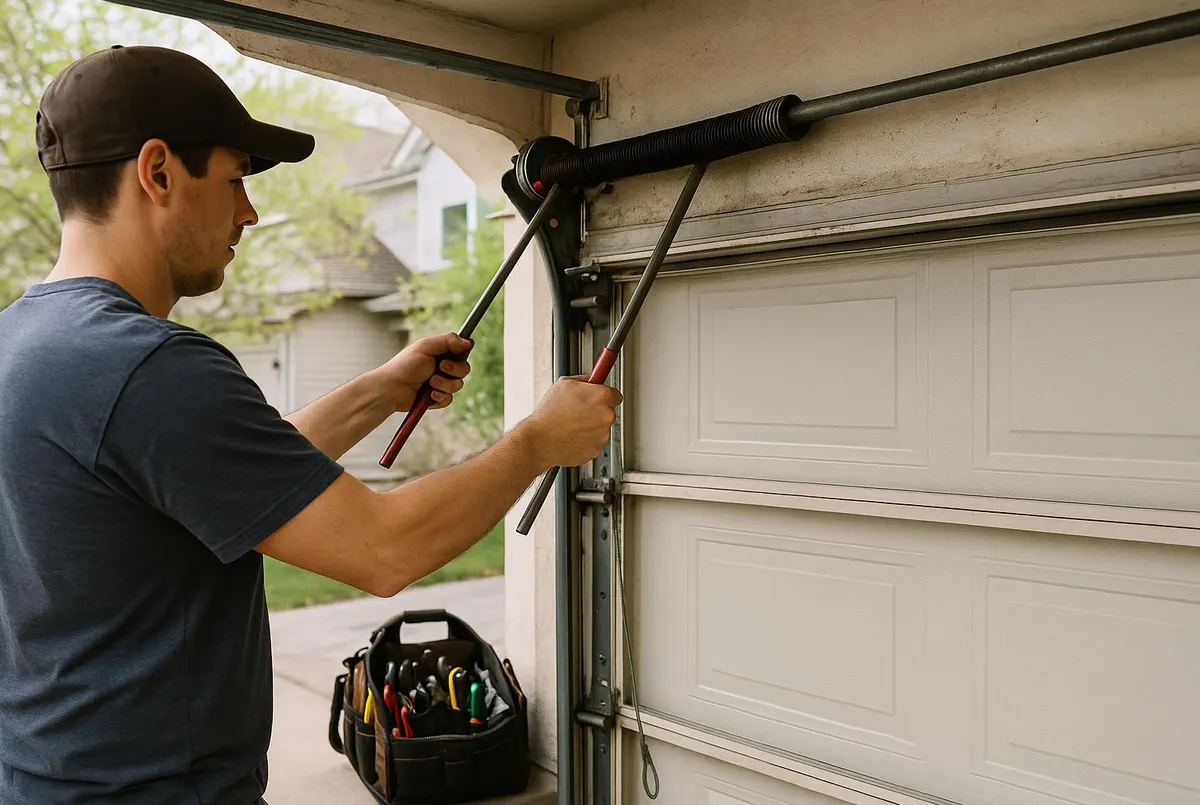
What should go to a technician every time: any adjustment to spring tension, torsion spring replacement, cable replacement, or drum realignment. Torsion springs are under extreme tension and the tools and winding bars used to adjust them can cause serious injury if you don't do this regularly. If your balance test showed drift, creep, or a tilt, that's a spring adjustment job, not a weekend project.
When to Call Lambertville Overhead Door Co
If your door failed the lift test, call before the opener takes more damage trying to compensate. Our Spring Replacement service resets the tension so the door carries its own weight the way it's supposed to, and if the opener has already been straining, our Garage Door Opener Service checks the motor, gears, and force settings to see what the unbalanced door may have affected. We serve Lambertville, Temperance, Ottawa Lake, Sylvania, Toledo, Monroe, Bedford Township, and Erie, and we'd rather fix a spring now than replace an opener motor in February.
If your balance test didn't go the way it should have, give Lambertville Overhead Door Co a call. We'll get your door moving the way it's meant to before winter puts more strain on it.