
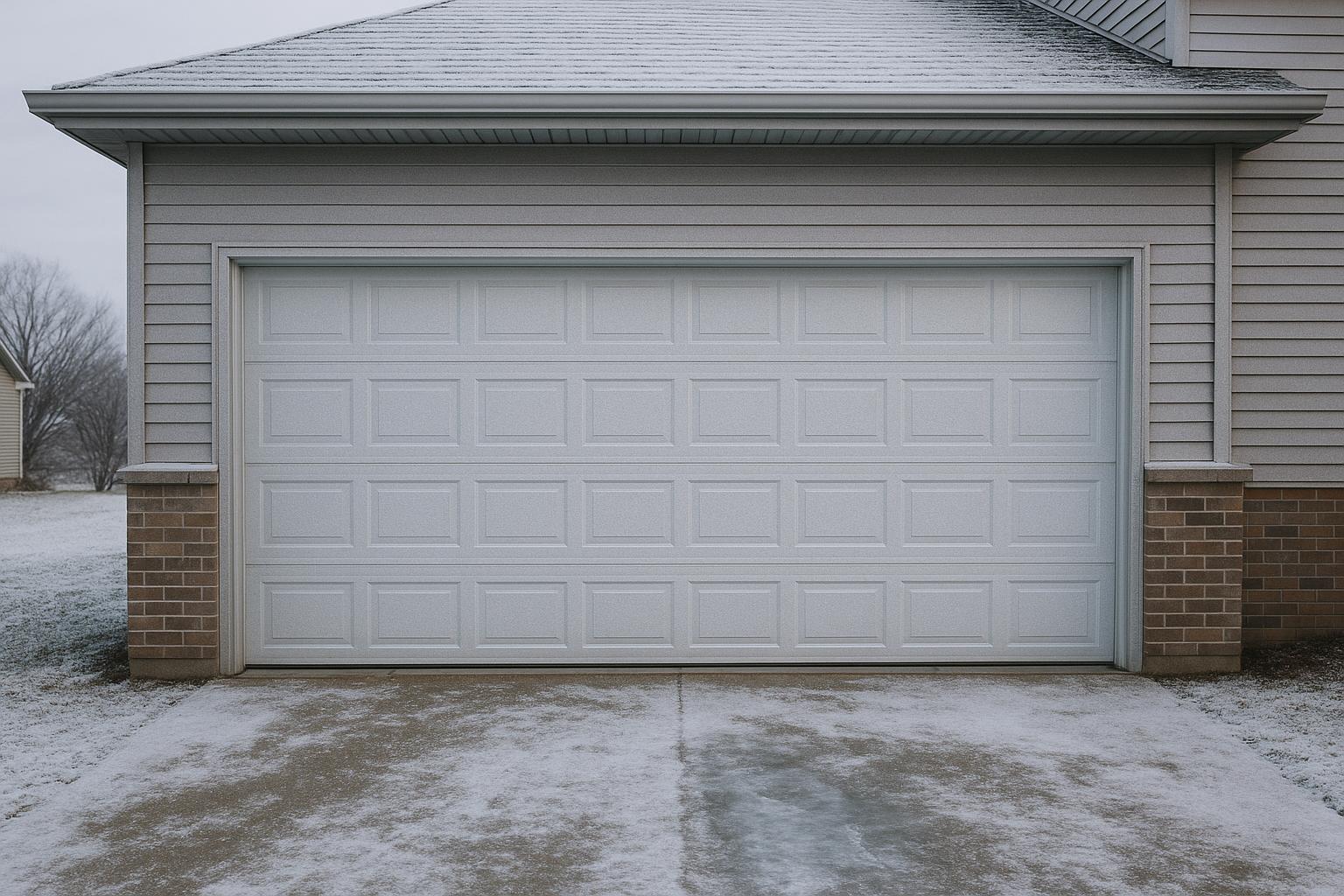
Cold Weather and Garage Doors: A Common Winter Problem in Lambertville
If you've ever pressed your garage door opener on a frigid Michigan morning and nothing happened — or the door groaned, stuttered, and refused to budge — you're not alone. Cold weather is one of the most common causes of garage door problems, and homeowners in Lambertville and the surrounding areas deal with it every winter.
The good news is that most cold-weather garage door issues have straightforward causes and solutions. Understanding what's happening can help you avoid getting stuck in your driveway on the coldest day of the year.
Why Cold Weather Affects Your Garage Door
Your garage door is a mechanical system with metal parts, lubricants, weatherstripping, and electronic components — all of which respond to temperature changes. When temperatures drop below freezing, several things can go wrong at once.
Metal Contracts in the Cold
Metal components like springs, tracks, and hinges contract slightly in cold temperatures. This contraction increases friction throughout the system, making the door harder to move. Springs lose some of their tension, which means the opener has to work harder to lift the door. In extreme cold, this added strain can cause an opener to stall out completely or trigger its safety features and shut down.
Lubricant Thickens or Freezes
The grease and lubricant on your garage door's moving parts can thicken significantly in cold weather. When lubricant becomes sluggish, rollers don't spin freely, hinges resist bending, and the entire door feels heavy and slow. If the wrong type of lubricant was used during a previous service, it may even harden completely in sub-zero conditions.
Weatherstripping Freezes to the Ground
This is one of the most common winter garage door problems. The rubber weatherstripping along the bottom of your garage door can freeze to the concrete floor or driveway surface, especially after rain, snow melt, or ice accumulation. When you try to open the door, it either won't move at all or the weatherstripping tears away from the door.
The Opener Loses Power or Sensitivity
Garage door openers are calibrated to lift a specific amount of weight. When cold weather increases the resistance throughout the system, the opener may interpret the extra load as an obstruction and stop — a safety feature designed to prevent the door from crushing something in its path. The result is a door that starts to move and then stops, or one that won't engage at all.
How to Get Your Garage Door Unstuck in Cold Weather
Before you call for help, there are a few things you can safely try on your own.
Check for Ice Along the Bottom Seal
Look at the bottom edge of your garage door where it meets the floor. If you see ice bonding the weatherstripping to the ground, carefully break the seal using a flat shovel or a heat source like a hair dryer. Never use a sharp tool that could damage the weatherstripping or the door itself. Once the ice is broken, the door should open normally.
Try Opening the Door Manually
If the opener isn't getting the job done, pull the emergency release cord (usually a red handle hanging from the opener rail) to disconnect the door from the opener. Then try lifting the door by hand. If it moves freely, the issue is likely with the opener. If it's still stuck or extremely heavy, the problem is mechanical — possibly the springs or frozen components.
Apply a Silicone-Based Lubricant
If the door moves but feels sluggish, apply a silicone-based garage door lubricant to the rollers, hinges, tracks, and spring coils. Silicone-based products resist freezing far better than standard grease. Avoid using WD-40 as a long-term lubricant — it works as a solvent but doesn't provide lasting lubrication in cold conditions.
Clear Snow and Ice from the Tracks
Inspect the tracks on both sides of the door for ice buildup, snow, or debris. Even a small amount of frozen material in the track can prevent the rollers from passing through smoothly. Wipe the tracks clean with a rag and check that they're properly aligned.
Preventing Cold-Weather Garage Door Problems
The best approach is to prepare your garage door for winter before the first hard freeze hits. Here's what we recommend to our customers in Lambertville, Temperance, and the Toledo area:
- Schedule a fall maintenance visit. A professional tune-up before winter ensures your springs are properly tensioned, all moving parts are lubricated with cold-weather-appropriate products, and your opener is calibrated correctly.
- Replace worn weatherstripping. Old, cracked weatherstripping is more likely to absorb water and freeze to the ground. Fresh weatherstripping creates a better seal and resists sticking.
- Apply a thin coat of silicone spray to the bottom seal. This creates a barrier between the rubber and the concrete, making it much less likely to freeze in place overnight.
- Keep the area around your garage door clear. Shovel snow away from the base of the door regularly. Standing water or packed snow along the threshold is the primary cause of freeze-related sticking.
- Insulate your garage. A garage that stays even a few degrees above freezing will have far fewer cold-weather door issues. Insulated garage doors also help reduce energy costs if your garage is attached to your home.
When to Call a Professional
Some cold-weather garage door problems go beyond what you can handle with a can of lubricant and a shovel. Call a professional if:
- The door won't open manually and feels extremely heavy — this likely indicates a broken or weakened spring.
- The opener runs but the door doesn't move, which could signal a stripped gear or broken drive component.
- You notice the door is visibly off-track or sagging on one side.
- The door opens partway and then stops repeatedly, even after you've cleared ice and lubricated the system.
- You hear loud popping or snapping sounds when attempting to open the door.
Forcing a garage door open when something is mechanically wrong can cause serious damage to the door, the opener, or the tracks — and it can be dangerous. Garage door springs are under extreme tension, and a spring that's been weakened by cold and stress can snap without warning.
Don't Wait Until You're Stuck
Winter garage door problems are predictable, which means they're preventable. If your garage door has been giving you trouble on cold mornings, or if it's been more than a year since your last service, now is the time to address it.
At Lambertville Overhead Door Co, we help homeowners throughout Lambertville, Monroe, Sylvania, and the surrounding communities keep their garage doors running reliably through every Michigan winter. Whether you need a quick repair, a full tune-up, or a new insulated garage door, we'll show up on time and get it done right.
Give us a call before the next cold snap — your future self will thank you.