
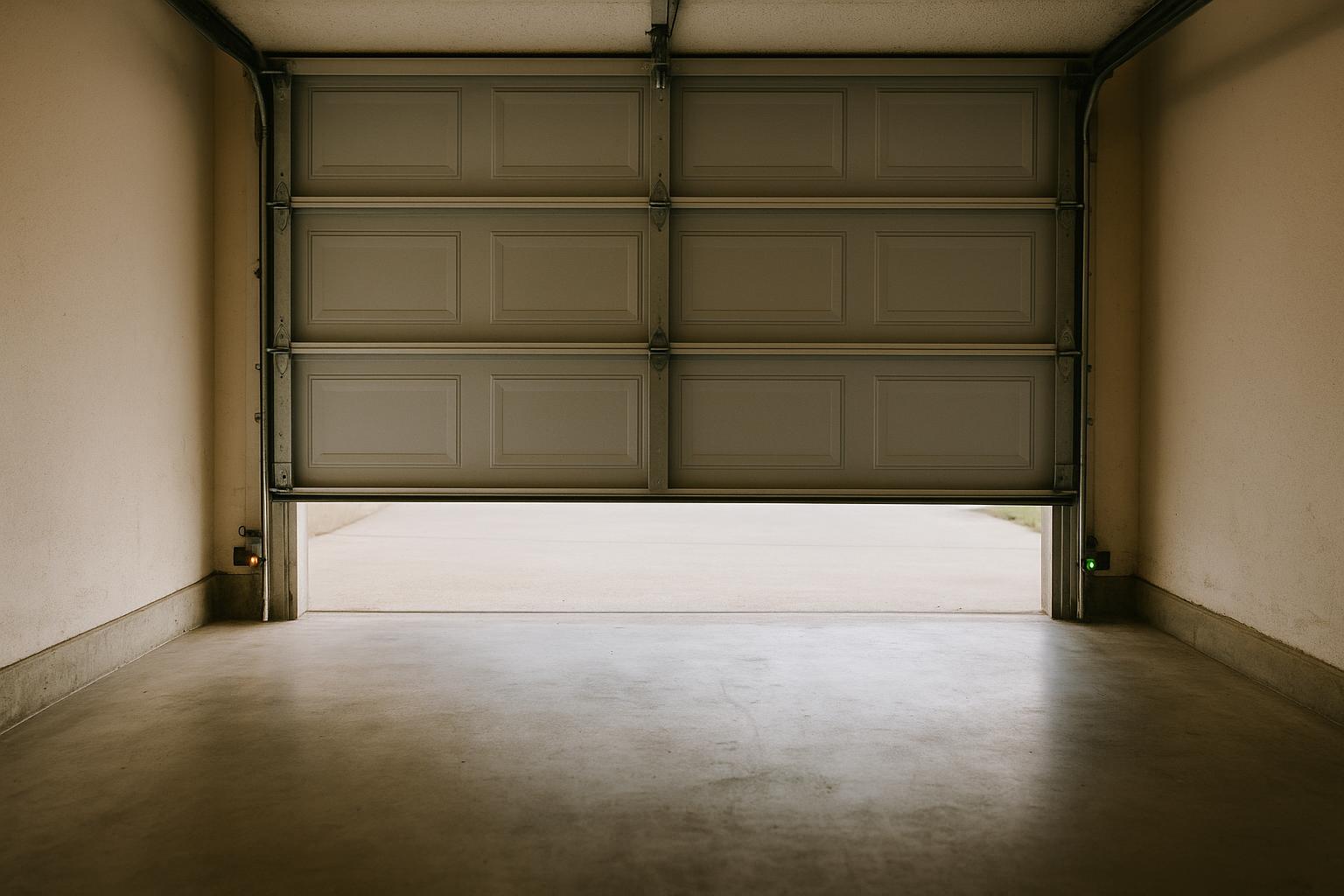
That Frustrating Moment When Your Garage Door Won't Stay Closed
You press the button on your garage door remote, watch the door start its descent, and then — just before it reaches the floor — it reverses and goes right back up. You try again. Same thing. Maybe you try holding the wall button down, and it still won't cooperate.
This is one of the most common garage door complaints we hear from homeowners in Lambertville and the surrounding communities. The good news is that a reversing garage door is usually a solvable problem. The bad news is that ignoring it leaves your garage wide open to weather, pests, and security concerns.
Let's walk through the most likely reasons your garage door reverses before hitting the floor and what you can do about each one.
1. Misaligned or Dirty Safety Sensors
This is the number one cause of a garage door that reverses before closing completely. Every garage door opener manufactured after 1993 is required to have photoelectric safety sensors — also called photo eyes — mounted near the bottom of the door tracks on each side. These sensors send an invisible beam across the opening. If anything breaks that beam, the door reverses to prevent crushing a person, pet, or object.
Here's the thing: these sensors don't have to be blocked by something large. A small misalignment, a cobweb, dust on the lens, or even direct sunlight hitting one sensor can trick the system into thinking there's an obstruction.
What You Can Do
- Check that nothing is physically blocking the path between the two sensors.
- Wipe each sensor lens gently with a soft cloth.
- Look at the indicator lights on each sensor. Most models show a steady green light when aligned and a flickering or off light when misaligned.
- Gently adjust the sensor bracket until both lights are steady.
If you've cleaned and adjusted the sensors and the problem persists, the wiring between the sensors and the opener may be damaged. That's a job best left to a professional.
2. Incorrect Close-Limit Settings
Your garage door opener has internal settings that tell it exactly how far the door should travel when opening and closing. These are called limit settings or travel limits. If the close-limit setting is off — telling the door to travel farther than it physically can — the opener interprets the resistance at the bottom as an obstruction and reverses the door.
This issue commonly appears after a new opener installation, a spring replacement, or even seasonal temperature changes that cause metal tracks and hardware to expand or contract slightly.
What You Can Do
Most openers have adjustment screws or a digital menu for setting the travel limits. Your owner's manual will explain how to make small adjustments. Turn the close-limit adjustment in small increments and test the door after each change. If you're not comfortable making these adjustments, our team at Lambertville Overhead Door Co can dial in the settings quickly during a service call.
3. The Close-Force Setting Is Too Low
Separate from the travel limit, your opener also has a force setting that determines how much resistance the motor will push through before reversing. If this setting is too sensitive, the door may reverse from the normal resistance of the weatherstripping compressing against the garage floor.
What You Can Do
Similar to the limit adjustment, there's usually a force adjustment screw or digital setting on your opener. Increase the close force in small increments and test. Be careful not to set it too high — the door should still reverse if it encounters a real obstruction. Place a 2x4 flat on the ground under the door and close it. The door should reverse when it contacts the board. If it doesn't, the force is set too high and creates a safety hazard.
4. Worn or Damaged Tracks
Bent, dented, or misaligned tracks can cause the rollers to bind as the door approaches the closed position. When the opener senses this binding, it interprets it as an obstruction and reverses. You might hear grinding, scraping, or popping sounds as the door moves through the damaged section.
Inspect your tracks visually. Look for obvious bends, gaps between the track and the wall-mounting brackets, or debris caught in the track. Minor debris can be cleared, but bent tracks typically need professional repair or replacement. Trying to hammer a track back into shape while it's under the tension of a loaded door system can be dangerous.
5. Broken or Worn Rollers
Garage door rollers wear out over time. Nylon rollers can crack, and steel rollers can lose their bearings. When a roller seizes or doesn't spin freely, it creates drag that the opener may read as resistance from an obstruction. This is especially common in older homes around Lambertville where the original rollers may have been in service for 15 or 20 years without replacement.
Replacing rollers is a relatively affordable maintenance item that can dramatically improve how smoothly and quietly your door operates. We recommend having all rollers replaced at the same time rather than one at a time, since they tend to wear at similar rates.
6. Problems with the Garage Door Springs
Your garage door springs do the heavy lifting — literally. They counterbalance the weight of the door so the opener only has to provide a small amount of force to move it. When springs weaken, lose tension, or break, the door becomes much heavier than the opener expects. The motor strains, hits its force limit, and reverses.
If you notice your door feels unusually heavy when you try to lift it manually, or if you see a gap in one of the torsion springs above the door, you likely have a spring issue. Spring replacement is one of the most dangerous garage door repairs and should always be handled by a trained technician. The springs are under extreme tension and can cause serious injury if mishandled.
7. Wiring or Logic Board Issues
Less commonly, the problem can be electrical. Frayed sensor wires, corroded connections, or a failing logic board inside the opener can send incorrect signals that cause erratic behavior, including random reversals. If you've ruled out all the mechanical and alignment causes above, an electrical diagnosis is the next step.
When to Call a Professional
Some of the fixes above — cleaning sensors, checking for obstructions, and making small limit adjustments — are reasonable for a handy homeowner to tackle. But if the problem involves springs, tracks, wiring, or opener internals, professional service is the safer and more reliable route.
At Lambertville Overhead Door Co, we troubleshoot reversing garage doors regularly for homeowners in Lambertville, Temperance, Ottawa Lake, and the greater Toledo area. Most of the time, we can diagnose and resolve the issue in a single visit. We'll also inspect the rest of your door system while we're there to catch any developing problems before they leave you stuck.
Don't Leave Your Garage Open to Trouble
A garage door that won't close all the way isn't just an inconvenience — it's a security risk and an invitation for weather damage, pests, and energy loss. If your door keeps reversing and the basic troubleshooting steps haven't solved it, give us a call. We'll get your door closing properly and give you one less thing to worry about.